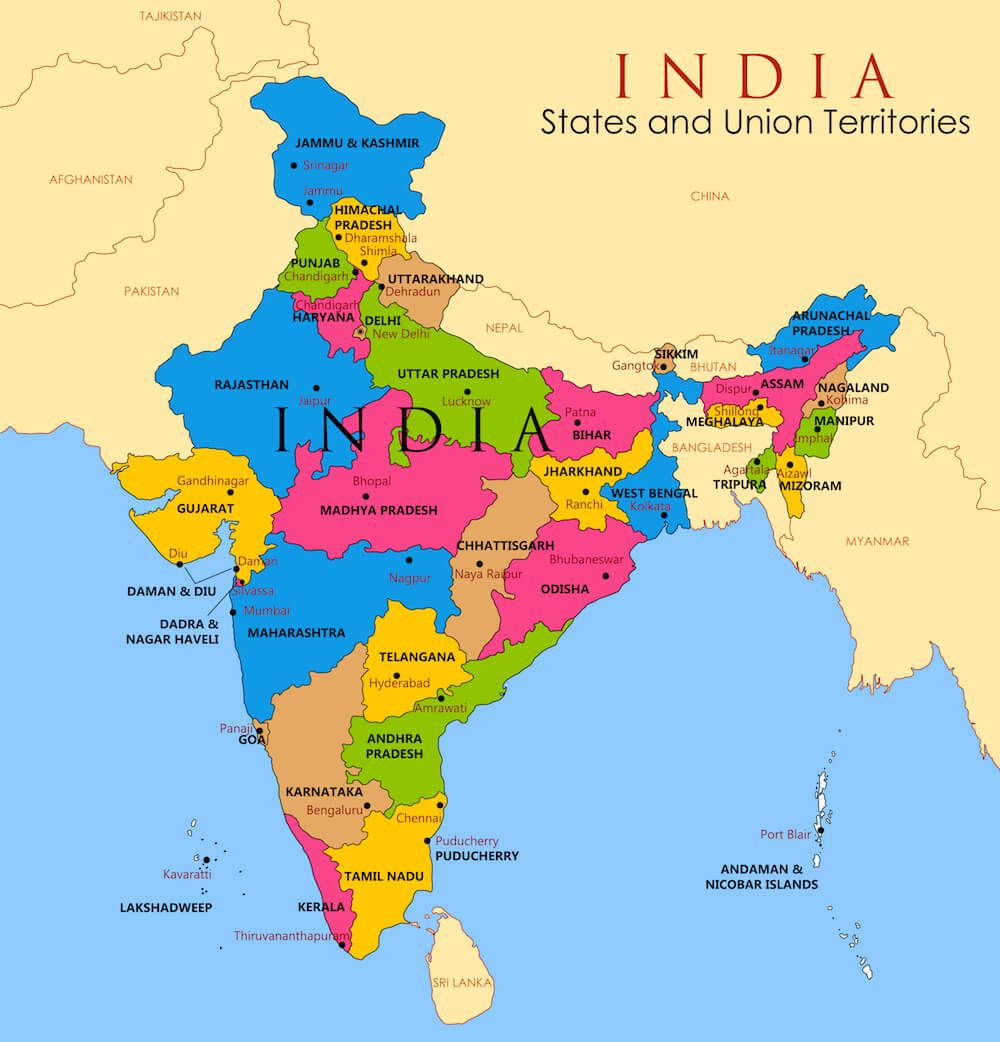
full form of india : officially the Republic of India is a country in South Asia. It is the second-most populous country, the seventh-largest country by land area, and the most populous democracy in the world. Bounded by the Indian Ocean on the south, the Arabian Sea on the southwest, and the Bay of Bengal on the southeast, it shares land borders with Pakistan to the west, China, Nepal, and Bhutan to the north, and Bangladesh and Myanmar to the east.
In the Indian Ocean, India is in the vicinity of Sri Lanka and the Maldives, its Andaman and Nicobar Islands share a maritime border with Thailand, Myanmar and Indonesia.India is not an acronym. (full form of india) So, it doesn’t have any full form.yesthe (full form of india) is not officially decleared but somewhere you can see some interesting and funny (full form of india) this like

full form of india
- I: Independent
- N: National
- D: Democratic
- I: Intelligent
- A: Area
what is the full form of india
- I: Independent
- N: National
- D: Democratic
- I: Intelligent
- A: Area
The name India is derived from the word Indus which itself derived from the old Persian word Hindu, from Sanskrit Sindhu. Indus is also the name of a river. Greeks used to refer the country on the other side of the river Indus as Indoi. It is altered as India later.
full form of india by social media ?
There are some social media post and whatsapp viral message says that full form of india is “INDEPENDENT NATION DECALERED IN AUGUST”.This post circulating on social media about the meaning of India as Independent Nation Declared In August is FALSE. The word India existed even before India’s Independence So We can says that full form of india is not officialy declared.
Full form of INDIA 🇮🇳
I – Independent
N – nation
D – declared
I – In
A – AugustNow your turn 😉@RijulJk @bhaktshriramki @Amit_Sharma_7 @arumitash @ayushi_172 @hythisisme_arya @seedofstatistic
— अभिजीत समोत्रा 👑 ( सिम्बा 🦁 ) (@AbhijeetSamotra) May 30, 2021

यह खबर भी पढ़ें : सच आप तक : गांधीजी की वो 5 गलतियां, जिनका खामियाज़ा भारत आज भी भुगत रहा है!
Brief History of India (full form of india)
full form of india and Brief History of India : India has been a federal republic since 1950, governed in a democratic parliamentary system. It is a pluralistic, multilingual and multi-ethnic society. India’s population grew from 361 million in 1951 to 1.211 billion in 2011. During the same time, its nominal per capita income increased from US$64 annually to US$1,498, and its literacy rate from 16.6% to 74%.
From being a comparatively destitute country in 1951, India has become a fast-growing major economy and a hub for information technology services, with an expanding middle class.
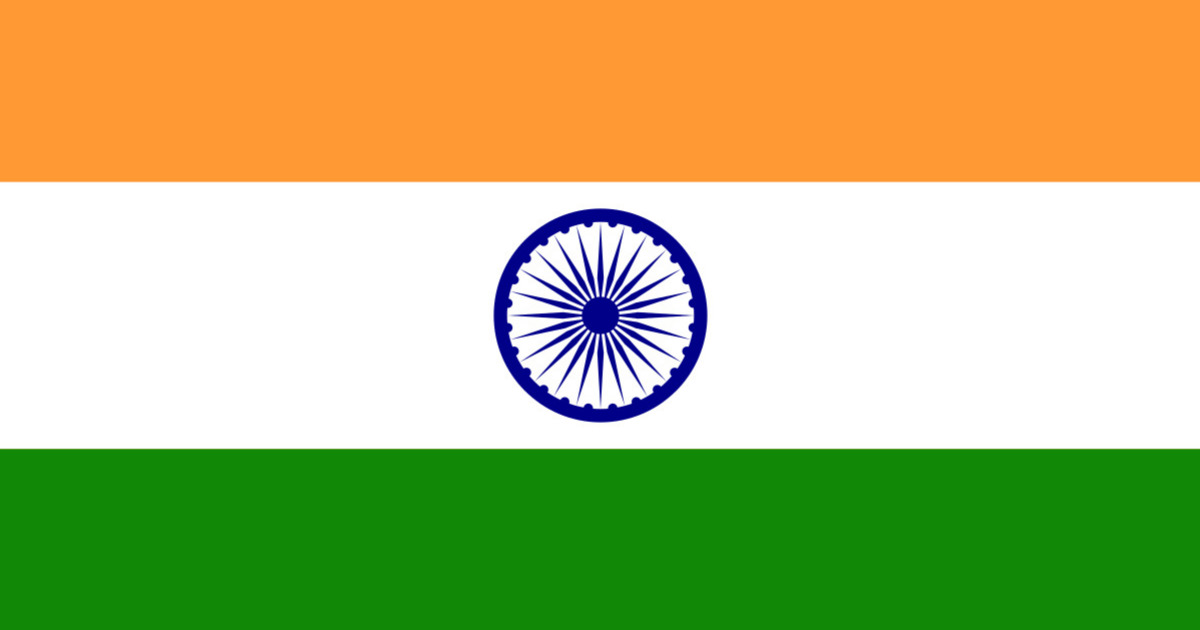
It has a space programme which includes several planned or completed extraterrestrial missions. Indian movies, music, and spiritual teachings play an increasing role in global culture. India has substantially reduced its rate of poverty, though at the cost of increasing economic inequality. India is a nuclear-weapon state, which ranks high in military expenditure. It has disputes over Kashmir with its neighbours, Pakistan and China, unresolved since the mid-20th century. Among the socio-economic challenges India faces are gender inequality, child malnutrition.
rising levels of air pollution. India’s land is megadiverse, with four biodiversity hotspots. Its forest cover comprises 21.7% of its area. India’s wildlife, which has traditionally been viewed with tolerance in India’s culture, is supported among these forests, and elsewhere, in protected habitats.
Independence Day (India)
Independence Day is celebrated annually on 15 August as a national holiday in India commemorating the nation’s independence from the United Kingdom on 15 August 1947, the day when the provisions of the 1947 Indian Independence Act, which transferred legislative sovereignty to the Indian Constituent Assembly, came into effect. India retained King George VI as head of state until its transition to a full republic, when the nation adopted the Constitution of India on 26 January 1950 (celebrated as Indian Republic Day) and replaced the dominion prefix, Dominion of India, with the enactment of the sovereign law Constitution of India. India attained independence following the Independence Movement noted for largely non-violent resistance and civil disobedience.
Independence Day before Independence
At the 1929 Lahore session of the Indian National Congress, the Purna Swaraj declaration, or “Declaration of the Independence of India” was promulgated, and 26 January 1930 was declared as Independence Day at that time. The Congress called on people to pledge themselves to civil disobedience and “to carry out the Congress instructions issued from time to time” until India attained complete independence.
Celebration of such an Independence Day was envisioned to stoke nationalistic fervour among Indian citizens, and to force the British government to consider granting independence. The Congress observed 26 January as the Independence Day between 1930 and 1946. The celebration was marked by meetings where the attendants took the “pledge of independence”.
Jawaharlal Nehru described in his autobiography that such meetings were peaceful, solemn, and “without any speeches or exhortation”. Gandhi envisaged that besides the meetings, the day would be spent ” …
in doing some constructive work, whether it is spinning, or service of ‘untouchables,’ or reunion of Hindus and Mussalmans, or prohibition work, or even all these together”. Following actual independence in 1947, the Constitution of India came into effect on and from 26 January 1950; since then 26 January is celebrated as Republic Day.